
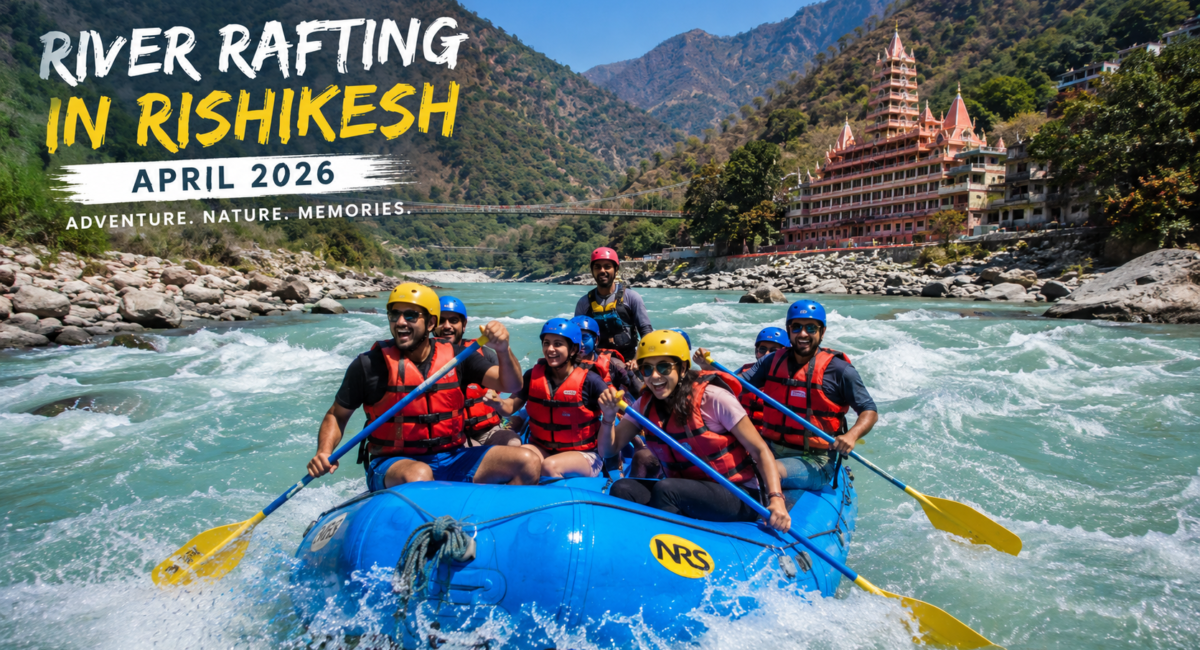
Water Rafting in Rishikesh
River Rafting in Rishikesh in April 2026: Prices, Best Stretches, Camping Combos & Honest Tips
Last updated: May 2026 | Reading time: 12 minutes
“River Rafting in Rishikesh” Let me tell you something nobody puts in their rafting guides-
-The first time I stood at Shivpuri ghat at 7:30 in the morning — April, cool air, the Ganga looking like hammered silver in the early light — I wasn’t thinking about grade III rapids or safety helmets. I was thinking: why didn’t I do this sooner?
April in Rishikesh has a completely different energy from the peak winter rush or the chaotic summer crowds. The riverbanks smell like mud and wildflowers. The water is cold but not punishing. The mountains behind you are still carrying snow on their highest ridges. And the river itself — it’s alive in a way that’s hard to explain until you’re in the middle of it, paddling hard through the Roller Coaster rapid while your guide shouts something that gets swallowed by the roar of water.
If you’re planning river rafting in Rishikesh in April 2026, this guide covers everything you actually need to know — not just the stretch names and prices everyone copy-pastes, but the real stuff: which stretch suits you, what the water is actually like in April, how to avoid getting ripped off, and what to pack so you don’t end up soaked and miserable before 9am.
River Rafting in Rishikesh
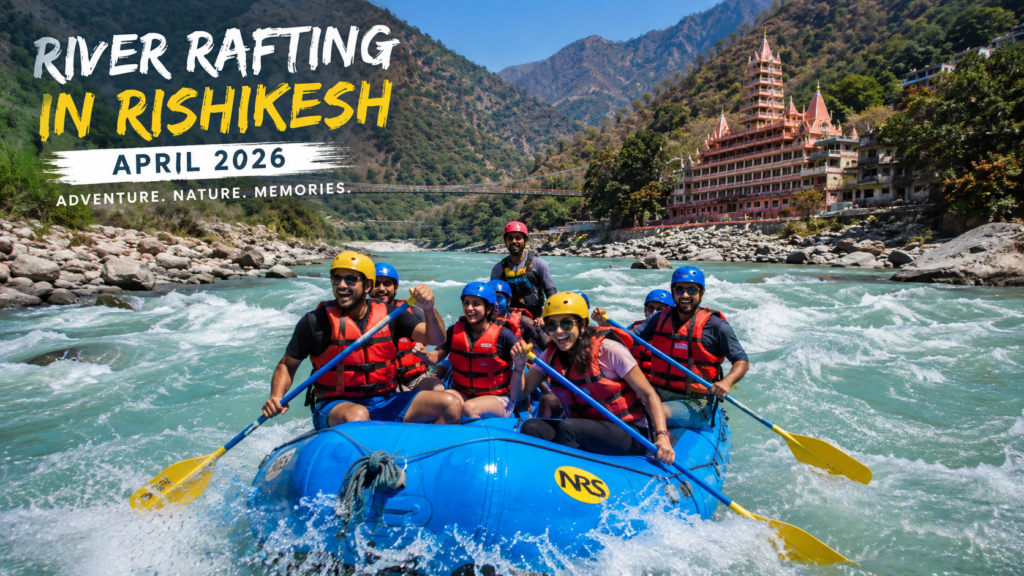
Why April Is One of the Best Months for Rafting in Rishikesh
April sits in a sweet spot that experienced rafters quietly love. Here’s what actually makes it special.
The water level is just right. By April, the Himalayan snowmelt has started in earnest, feeding the Ganga with consistent, energetic flow. The river runs between 100 and 150 cumecs on average — technical enough to create well-defined, exciting rapids, but controlled enough that even first-timers can handle the Shivpuri stretch without feeling like they’re in over their heads. Compare this to July, when monsoon turns the river into a brown, dangerous surge, or December, when low water levels make some rapids feel flat and underwhelming.
The temperature is genuinely pleasant. Daytime highs run between 20°C and 28°C through most of April. Early mornings at the ghat — when most rafting trips start — sit around 15–18°C, which is cool but not uncomfortable. You won’t need a wetsuit, and you won’t be baking under a relentless May sun either. That two-hour window between 7am and 9am is some of the most beautiful light you’ll ever see on a river.
Early April versus late April — it actually matters. In the first two weeks, water temperatures are slightly cooler from late-winter snowmelt. Rapids are more punchy. The third and fourth week of April sees slightly warmer air, more predictable flow, and a touch more crowd buildup as summer holiday travel begins. If you want the quieter, rawer version of April, aim for the first two weeks. If you’re travelling with family or nervous first-timers, late April is slightly more forgiving.
Crowds are manageable. April isn’t peak-season chaos. You won’t be queuing behind four other groups at the ghat every morning. Most operators can accommodate same-day or next-day bookings, though booking a week in advance still gets you better rates and your preferred time slot — especially on weekends.
Complete April 2026 Rafting Prices — All Stretches
Here’s an honest, neutral breakdown of current prices across all major stretches. The Uttarakhand government sets base rates through the GNR (Ganga Nadi Rafting Rotation Samiti), and there’s a mandatory ₹20 government rafting slip paid separately at the starting point.
River Rafting in Rishikesh
| Stretch | Distance | Difficulty | Duration | Price Range |
|---|---|---|---|---|
| Brahmpuri to NIM Beach | 9 km | Grade I–II | 1.5 hrs | ₹600–₹800 |
| Marine Drive to Shivpuri | 12 km | Grade II–III | 2 hrs | ₹600–₹800 |
| Shivpuri to NIM Beach | 16 km | Grade II–III+ | 2.5 hrs | ₹1,000–₹1,200 |
| Marine Drive to Rishikesh | 24–26 km | Grade III–IV | 4–5 hrs | ₹1,500–₹1,700 |
| Kaudiyala / Byasi to Rishikesh | 30–36 km | Grade III–V | 5.5–6 hrs | ₹2,000–₹2,500 |
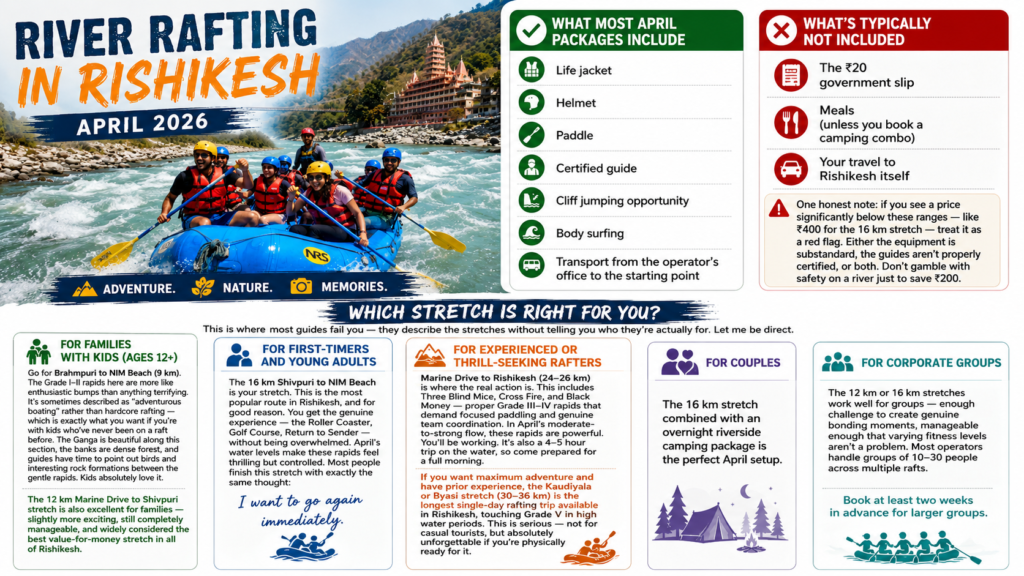
What most April packages include: life jacket, helmet, paddle, certified guide, cliff jumping opportunity, body surfing, and transport from the operator’s office to the starting point.
What’s typically NOT included: the ₹20 government slip, meals (unless you book a camping combo), and your travel to Rishikesh itself.
One honest note: if you see a price significantly below these ranges — like ₹400 for the 16 km stretch — treat it as a red flag. Either the equipment is substandard, the guides aren’t properly certified, or both. Don’t gamble with safety on a river just to save ₹200.
Which Stretch Is Right for You?
This is where most guides fail you — they describe the stretches without telling you who they’re actually for. Let me be direct.
For Families with Kids (Ages 12+)
Go for Brahmpuri to NIM Beach (9 km). The Grade I–II rapids here are more like enthusiastic bumps than anything terrifying. It’s sometimes described as “adventurous boating” rather than hardcore rafting — which is exactly what you want if you’re with kids who’ve never been on a raft before. The Ganga is beautiful along this section, the banks are dense forest, and guides have time to point out birds and interesting rock formations between the gentle rapids. Kids absolutely love it.
The 12 km Marine Drive to Shivpuri stretch is also excellent for families — slightly more exciting, still completely manageable, and widely considered the best value-for-money stretch in all of Rishikesh.
For First-Timers and Young Adults
The 16 km Shivpuri to NIM Beach is your stretch. This is the most popular route in Rishikesh, and for good reason. You get the genuine experience — the Roller Coaster, Golf Course, Return to Sender — without being overwhelmed. April’s water levels make these rapids feel thrilling but controlled. Most people finish this stretch with exactly the same thought: I want to go again immediately.
For Experienced or Thrill-Seeking Rafters
Marine Drive to Rishikesh (24–26 km) is where the real action is. This includes Three Blind Mice, Cross Fire, and Black Money — proper Grade III–IV rapids that demand focused paddling and genuine team coordination. In April’s moderate-to-strong flow, these rapids are powerful. You’ll be working. It’s also a 4–5 hour trip on the water, so come prepared for a full morning.
If you want maximum adventure and have prior experience, the Kaudiyala or Byasi stretch (30–36 km) is the longest single-day rafting trip available in Rishikesh, touching Grade V in high water periods. This is serious — not for casual tourists, but absolutely unforgettable if you’re physically ready for it.
For Couples
The 16 km stretch combined with an overnight riverside camping package is the perfect April setup. More on that in the next section.
For Corporate Groups
The 12 km or 16 km stretches work well for groups — enough challenge to create genuine bonding moments, manageable enough that varying fitness levels aren’t a problem. Most operators handle groups of 10–30 people across multiple rafts. Book at least two weeks in advance for larger groups.
River Rafting in Rishikesh
Rafting + Camping Combos — April’s Best Experience
Here’s something a lot of rafting guides skip over entirely: a huge proportion of April visitors combine their rafting with an overnight riverside camp. And honestly, the camping-plus-rafting package is often better value and a far richer experience than a standalone day trip.
There are three clear tiers, and the right one depends on your group and budget.
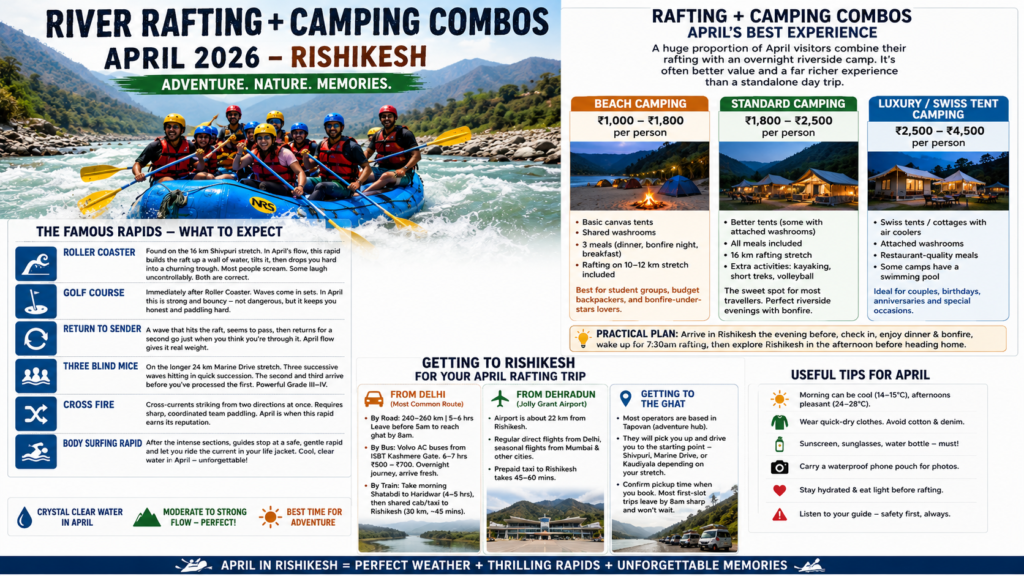
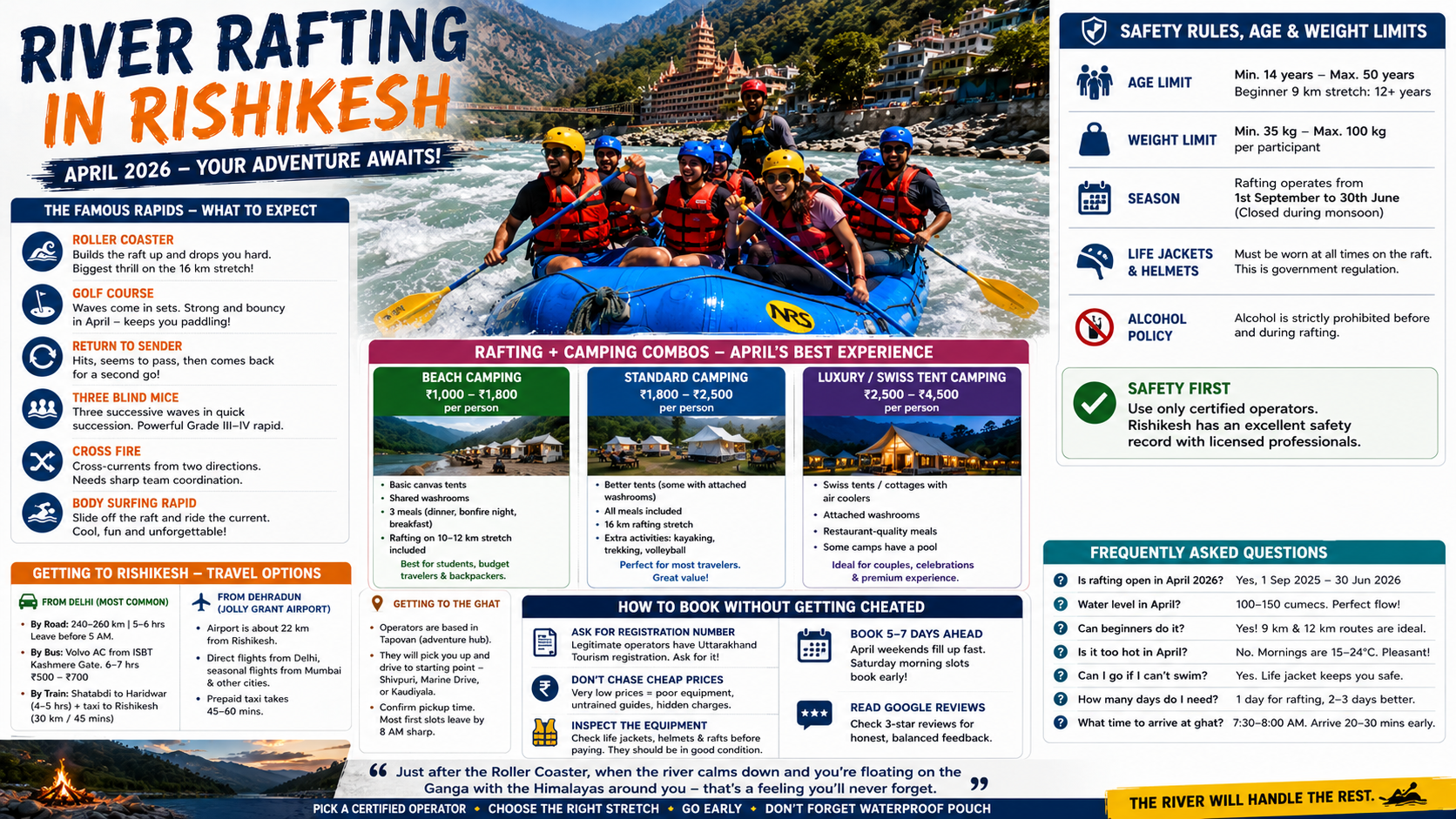
Beach Camping (₹1,000–₹1,800 per person) Basic canvas tents, shared washrooms, three meals (dinner on arrival, bonfire night, breakfast next morning), and rafting on a 10–12 km stretch included in the price. Best for student groups, budget backpackers, and anyone who wants the bonfire-under-stars experience without spending big. The simplicity is part of the charm — you’re sleeping a few metres from the river with nothing but Himalayan forest around you.
Standard Camping (₹1,800–₹2,500 per person) Better tents, some with attached washrooms, all meals, 16 km rafting stretch, and usually a handful of extra activities like kayaking, short treks, or volleyball. This is the sweet spot for most travellers. April evenings by the Ganga with a bonfire crackling and the sound of the river as your background noise — it’s one of those experiences people talk about for years.
Luxury / Swiss Tent Camping (₹2,500–₹4,500 per person) Proper Swiss tents or cottage-style accommodation with air coolers, attached washrooms, restaurant-quality meals, and in some camps, a small swimming pool. If you’re planning a birthday trip, anniversary, or just want to treat yourself properly, this end of the range is genuinely wonderful. Couples especially lean toward the luxury camps, and it’s easy to understand why.
A practical April plan that works well: arrive in Rishikesh the evening before your rafting day, check into camp, have dinner, sleep early, wake up for the 7:30am morning slot, raft your chosen stretch, then spend the afternoon walking through Rishikesh town before heading home.
The Famous Rapids — What to Actually Expect
Knowing what’s coming makes the experience much better. You stop bracing for the unknown and start enjoying the ride.
Roller Coaster — Found on the 16 km Shivpuri stretch. In April’s water flow, this rapid builds the raft up a climbing wall of water, tilts it, then drops you hard into a churning trough. The name earns itself completely. Most people scream. Some people laugh uncontrollably. Both reactions are correct.
Golf Course — Immediately after Roller Coaster, before you’ve caught your breath. Waves come in sets. In April this is strong and bouncy — not dangerous, but it keeps you honest and paddling hard.
Return to Sender — A wave that hits the raft, seems to pass, then returns for a second go just when you think you’re through it. April flow gives it real weight.
Three Blind Mice — On the longer 24 km Marine Drive stretch. Three successive waves hitting in quick succession. The second and third arrive before you’ve processed the first. At April’s water level, these are genuinely powerful Grade III–IV features.
Cross Fire — Cross-currents striking from two directions at once. Requires sharp, coordinated team paddling. April is when this rapid earns its reputation and separates the focused rafters from the ones just sitting there.
Body Surfing Rapid — After the intense sections, guides typically stop at a safe, gentle rapid and let you slide off the raft and ride the current in your life jacket. In April the water is cool and clear. It’s one of those moments that gets remembered long after the adrenaline fades — just you, the river, and the mountains overhead.
Getting to Rishikesh for Your April Rafting Trip
Most rafting guides skip travel logistics entirely, which is strange because getting there on time directly affects your whole experience.
From Delhi (most common route): By road, Delhi to Rishikesh is roughly 240–260 km. By taxi or self-drive it takes 5–6 hours depending on traffic. Leave before 5am to avoid Delhi’s morning traffic and reach the ghat comfortably by 8am for your first slot. Volvo AC buses from ISBT Kashmere Gate to Rishikesh run overnight and take 6–7 hours, costing ₹500–₹700 — comfortable, affordable, and you arrive fresh.
By train, the smooth option is a morning Shatabdi from Delhi to Haridwar (about 4–5 hours), then a shared cab or taxi from Haridwar to Rishikesh (30 km, roughly 45 minutes). This sidesteps Delhi highway traffic entirely and is often the most relaxed way to arrive.
From Dehradun: Jolly Grant Airport sits about 22 km from Rishikesh. Regular direct flights connect from Delhi, and seasonal routes come in from Mumbai and other cities. A prepaid taxi from the airport to Rishikesh takes 45–60 minutes. If you’re flying specifically for a rafting weekend, this is the most comfortable arrival option.
Getting to the ghat itself: Most operators base themselves in Tapovan, which is the adventure-activity hub of Rishikesh. They’ll collect you there and drive you up to the starting point — Shivpuri, Marine Drive, or Kaudiyala depending on your stretch. Confirm your pickup time when you book. Most first-slot trips leave by 8am sharp and won’t wait.
River Rafting in Rishikesh
April Rafting Packing List — Specific, Not Vague
You don’t need much. But you do need the right things. River Rafting in Rishikesh
Wear on the raft:
- Quick-dry shorts or lightweight synthetic trekking pants. No jeans — denim is cold, heavy, and miserable when wet.
- Synthetic t-shirt or rash guard. Not cotton — cotton holds cold water against your skin for hours.
- Water shoes or old sneakers with grip. Flip-flops come off in rapids and are genuinely dangerous.
- A light fleece or jacket for the early morning wait at the ghat. April mornings at 7am by the river feel like 14–15°C even when the afternoon will hit 26°C. You’ll be glad you brought it.
Pack in a dry bag or waterproof bag:
- Change of dry clothes for after
- Sunscreen SPF 50+ (April sun on water is intense and reflects off the surface directly onto your face)
- Waterproof phone pouch — you will want photos, and phones go overboard more frequently than anyone admits
- Small water bottle — you’ll be on the river for hours
What you do NOT need in April:
- Wetsuit (water is cool but not cold — operators don’t provide them in April either)
- Heavy hiking or trekking gear
- Valuables — leave watches, wallets, and jewellery at camp or your hotel
Medical note: If you have a heart condition, high blood pressure, back or neck injuries, recent fractures, or are pregnant — rafting is not recommended regardless of the stretch. The river is physical, and the guide cannot pause things once you’re in a rapid.
Safety Rules, Age and Weight Limits
Uttarakhand regulates commercial rafting seriously. This is what you need to know before booking.
- Age: Minimum 14 years, maximum 50 years for most stretches. The beginner 9 km stretch allows ages 12 and above.
- Weight: Minimum 35 kg, maximum 100 kg per participant.
- Season: Rafting officially operates September 1 to June 30 each year. Closed during monsoon months for safety.
- Life jackets and helmets must be worn at all times on the raft. This is government regulation, not just operator preference.
- Alcohol is strictly prohibited before and during rafting. Any operator who allows this is not properly certified — treat it as a dealbreaker and walk away.
The safety record in Rishikesh is genuinely strong when you use a certified operator. Accidents happen almost exclusively with unlicensed or cheap operators who cut corners on equipment quality and guide training.
How to Book Without Getting Cheated
This section could save you more than the cost of the trip itself.
Ask for the registration number. Legitimate operators hold a Uttarakhand Tourism registration. Ask for it directly. A real operator will share it without hesitation. If they dodge the question or respond with “we are certified, trust us” — that’s your answer right there.
Don’t chase rock-bottom pricing. The GNR minimum rates exist for a reason. Packages priced far below market rates almost always mean compromised safety gear, guides without proper training, or hidden extras that get added at the ghat.
Inspect the equipment before you pay the final amount. Life jackets should be snug, properly fastened, and in visibly good condition — not faded and patched together. Rafts should be firmly inflated, not showing extensive repair work.
Book 5–7 days ahead for April weekends. Saturday morning slots — the most popular time for Delhi day-trippers — fill up from late March onwards. Mid-week bookings are easier and sometimes cheaper.
Read Google Maps reviews, not just the operator’s website. Search the operator’s name and look at 3-star reviews specifically. They tend to be the most balanced and honest — people who had a mostly good experience but noted something specific that went wrong.
River Rafting in Rishikesh
Frequently Asked Questions
Is rafting open in April 2026? Yes. The season runs from September 1, 2025 to June 30, 2026. April is fully operational across all stretches.
What is the water level like in April? Average flow of 100–150 cumecs. Strong enough for well-defined rapids on every major stretch, and manageable for beginners on the shorter routes. April is considered one of the two best months for water quality, along with October–November.
Can complete beginners do rafting in April? Absolutely. The 9 km and 12 km stretches are specifically suited for first-timers. April’s moderate flow makes them exciting without being overwhelming. Thousands of people raft Rishikesh for the first time every April without incident.
Is it too hot in April? No. Rafting happens in the morning, typically 7:30am to 12pm, when temperatures run 15–24°C. Pleasant, not hot. You may feel warm in the afternoon, but that’s after you’re off the water.
Can I go if I can’t swim? Yes, and it’s more common than you’d think. Your life jacket is designed to keep you floating face-up even if you fall out. The guide and safety kayaker are specifically trained for this. You should be comfortable with the idea of getting wet — but swimming ability is not a requirement.
How many days should I plan for? One day is enough for rafting. Two days lets you combine rafting with Rishikesh town — the Beatles Ashram, Laxman Jhula, the evening Ganga Aarti at Triveni Ghat. Three days opens up the camping experience along with time to explore the hills around Shivpuri.
What time should I arrive at the ghat? Most first slots depart between 7:30am and 8am. Arrive 20–30 minutes before for your safety briefing and equipment fitting. Operators are not sympathetic to late arrivals — they have timed slots and other groups waiting.
One Last Thought
River Rafting in Rishikesh
Rishikesh in April doesn’t need selling. The river does that itself. What I’ll say is this: the memory you’ll carry home isn’t the rapid grade or the package price. It’s the moment just after the Roller Coaster — when the roar dies down, the raft settles into quiet water, and you’re floating on the Ganga with the Himalayas above you, breathing hard, grinning at strangers who feel like friends now, wondering why normal life doesn’t feel this awake.
Pick a certified operator. Choose the right stretch for your group. Go early in the morning. Don’t forget the waterproof phone pouch.
The river will handle the rest.
Write A Review